
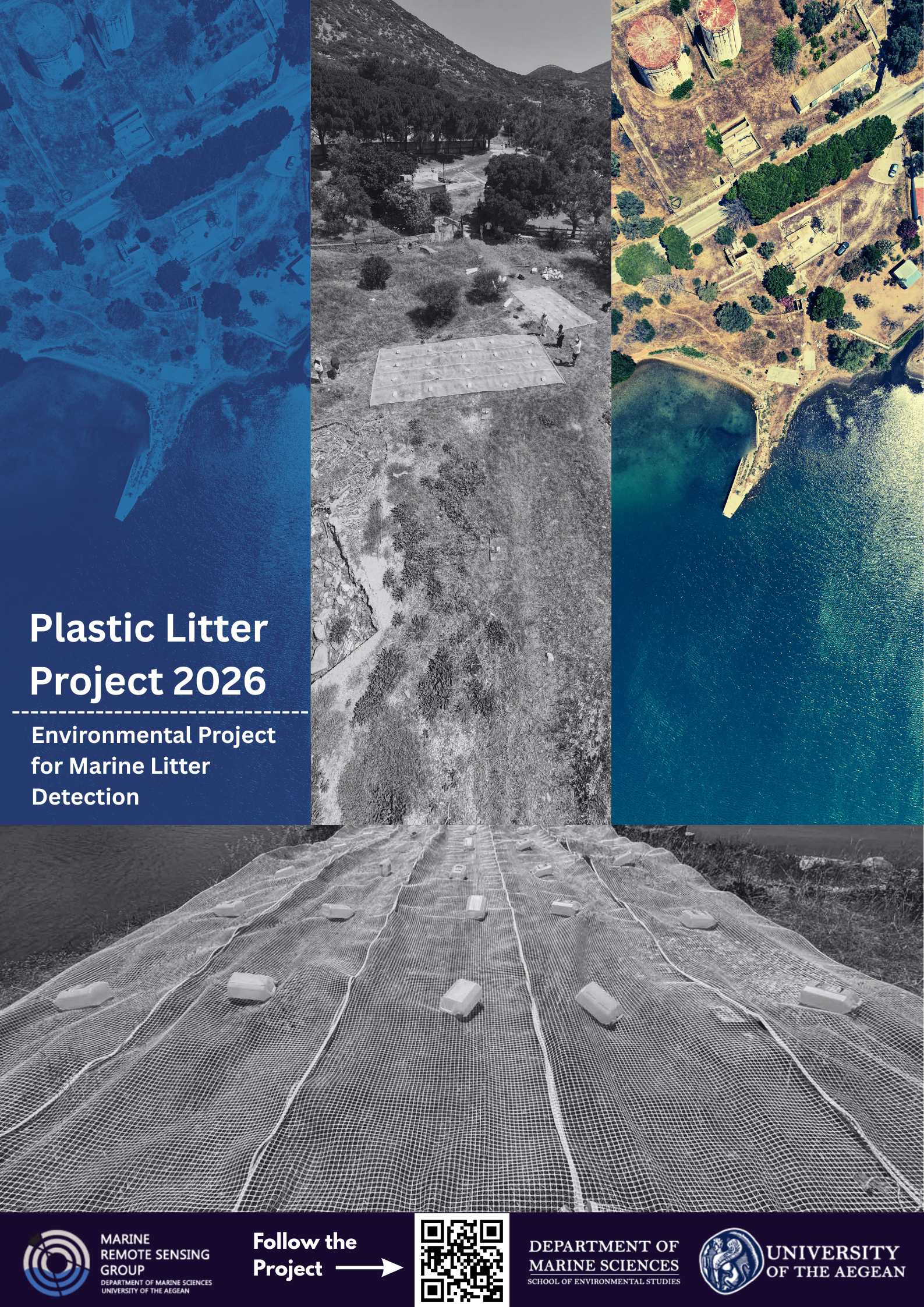
PLP2026 investigates the detection of floating marine plastics using hyperspectral satellite imagery.
Three HDPE targets—18 m², 45 m², and 90 m²—were designed to represent approximately 2%, 5%, and 10% of a 30 m PRISMA pixel.
Observations from PRISMA and EnMAP will be compared with Sentinel-2, PlanetScope, and UAV data to examine plastic detection across different spatial and spectral resolutions.
The PLP2026 field campaign began on 22 June 2026 with the construction of three floating targets at a port on the Gulf of Gera. Each target was carefully assembled, reinforced, and fitted with flotation materials in preparation for deployment.
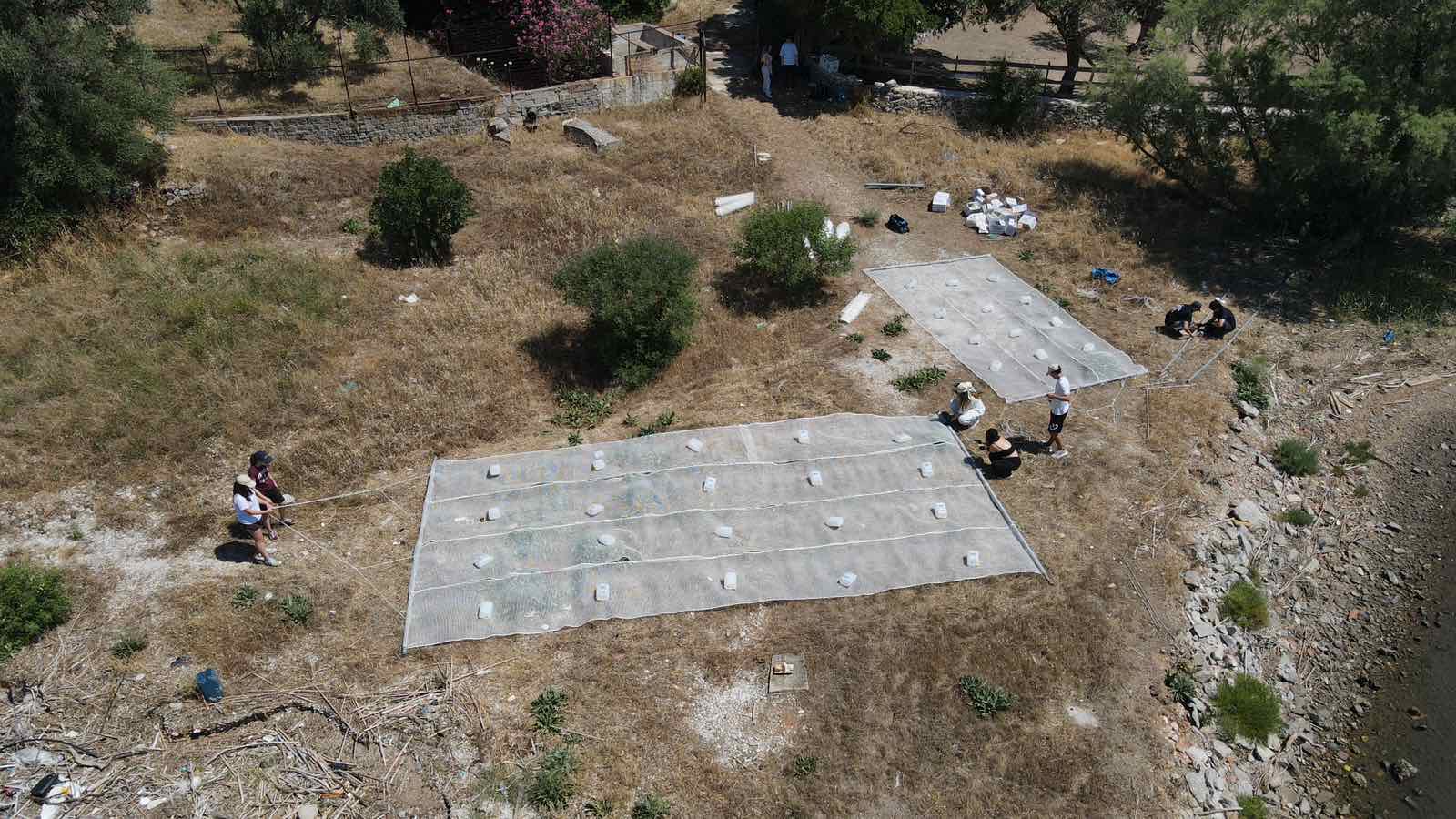

Constructing the PLP2026 targets was a true team effort. The MRSG team and students worked side by side to assemble the HDPE mesh, attach the flotation materials, and prepare each target for deployment.
On 24 June 2026, the completed targets were transported to the experimental site, positioned on the water, and secured to the buoy system. Their deployment marked the beginning of the satellite and UAV observation campaign.

Over the coming months, the team will continue to collect PRISMA, EnMAP, Sentinel-2, PlanetScope, and UAV observations. These data will be used to examine the spectral characteristics and detection limits of floating plastics across different spatial and spectral resolutions. Further updates will be shared as PLP2026 progresses.